
How to Get a Free Carfax Report by VIN in 2026
In 2026, free Carfax reports by VIN are accessible through select used car listings, authorized dealerships, trade-in appraisals, and Carfax’s Car Care platform. Buyers use these reports to verify accident history, title status, and odometer accuracy before purchasing a used vehicle. Sellers use them to increase buyer trust and justify asking prices. A valid 17-character VIN is required to generate any vehicle history report, whether free or paid. This guide outlines all current methods to get a free Carfax report, including dealership access, VIN-based search tools, and verified Carfax alternatives for 2026.
What Is a Carfax Report in 2026?
A Carfax report in 2026 is a comprehensive vehicle history report generated using over 30 billion records from more than 131,000 verified data sources across North America. These sources include Department of Motor Vehicles (DMVs), insurance companies, auto auctions, police departments, collision repair facilities, and franchise dealerships. The report documents critical information such as accident history, title branding (salvage, rebuilt, flood), odometer readings, ownership transfers, maintenance records, and open recalls. Carfax reports are linked directly to a vehicle’s 17-character VIN, ensuring accuracy and traceability. In 2026, both used car dealers and private sellers continue to rely on Carfax as the industry standard for vehicle history reporting, offering buyers a trusted way to assess vehicle integrity, safety, and market value before finalizing a purchase.
How Much Does a Carfax Report Cost in 2026?
In 2026, the cost of a single Carfax report is $44.99 USD, covering one full VIN-based vehicle history check. Carfax also offers multi-report bundles that reduce the per-report price for users comparing multiple used cars. A 2-report package is priced at $59.99 ($30 per report), while a 4-report package costs $109.99, bringing the price down to $27.50 per report. These packages are commonly used by buyers searching across several listings or dealers reviewing inventory. While Carfax remains a premium data provider, there are still legal and cost-free ways to access the same official report when it is included by dealers, private sellers, or trade-in services. Your ability to get a free Carfax depends on whether you’re a buyer, a seller, or servicing your own vehicle.
| Carfax Report Plan | Price (USD) | Cost Per Report | Suitable For |
|---|---|---|---|
| Single Report | $44.99 | $44.99 | One-time vehicle history check |
| 2-Report Package | $59.99 | $30.00 | Comparing two vehicles |
| 4-Report Package | $109.99 | $27.50 | Multi-vehicle buyers or dealers |
In 2026, used car buyers can obtain a free Carfax vehicle history report by targeting specific platforms, dealerships, and service programs that include official Carfax data at no extra cost. These methods rely on the vehicle’s VIN (Vehicle Identification Number), which must be 17 characters long. Each method below provides legitimate access to the official report without purchasing it directly from Carfax.com.
✅ Method 1: Browse Carfax.com Used Car Listings
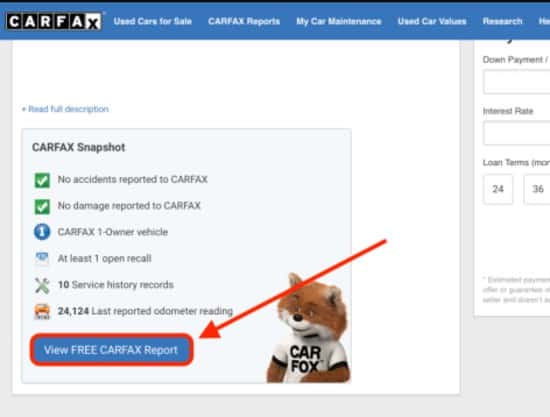
Carfax.com lists thousands of used vehicles with free Carfax reports.
- Navigate to the “Find a Used Car” section.
- Enter the make, model, and ZIP code.
- Filter for listings that include “View Free Carfax Report.”
- Click to access the full report directly from the listing page.
✅ Method 2: Shop at Certified Dealerships
Franchise and certified pre-owned dealerships often bundle Carfax reports with listed vehicles.
- Ask the dealer if a Carfax is available.
- Most dealerships show the report online or print it upon request.
- Some dealers also offer reports through partner platforms like CarGurus or TrueCar.
✅ Method 3: Use Cars.com or Autotrader.com
Both platforms host used car listings that include embedded Carfax reports.
- Search by year, make, model, and location.
- Filter by listings that mention “Free Carfax Available.”
- View reports directly on the listing detail page.
✅ Method 4: Ask a Private Seller to Provide the Report
Many private sellers already purchase a Carfax to increase buyer trust.
- Ask the seller if they can provide a copy.
- If not, suggest they use a discounted source like Cheap Carfax Report website.
- This approach improves transparency and negotiation power.
✅ Method 5: Sign Up for Carfax Car Care (Free Tool)
Carfax offers a free Car Care dashboard for tracking your own vehicle.
- Add your VIN at carfax.com/service/
- The system shows mileage updates, service alerts, and a history summary.
- While it may not be the full report, it includes verified data pulled from Carfax’s database.
✅ Method 6: Get a Dealer Trade-In Appraisal
Requesting a trade-in valuation triggers the dealer to run a Carfax.
- Visit a local dealership with your vehicle.
- Ask for a trade-in estimate.
- Most dealers generate a Carfax during the process and may share it with you at no cost.
✅ Method 7: Use iSeeCars VIN Report Tool
iSeeCars aggregates free VIN reports that often include Carfax or AutoCheck links.
- Go to iSeeCars.com
- Search for used cars and click “Free VIN Report.”
- The system may pull data directly from Carfax if available.
✅ Method 8: Join Auto Forums or VIN Sharing Communities
Some car enthusiasts and sellers share unused Carfax credits via communities like Reddit or automotive forums.
- Look for VIN-check threads or post your request.
- Use caution and never share personal information or pay upfront.
✅ Method 9: Use Free Carfax-Compatible Alternatives First
Before buying the full report, check basic history with tools like:
- NICB VINCheck – Detects theft or salvage title
- VehicleHistory.com – Offers ownership and accident history
- iSeeCars VIN Report – Pulls open recall info and price history
- If all three reports match across core data, you can confidently move forward — or escalate to buying the official Carfax if red flags appear
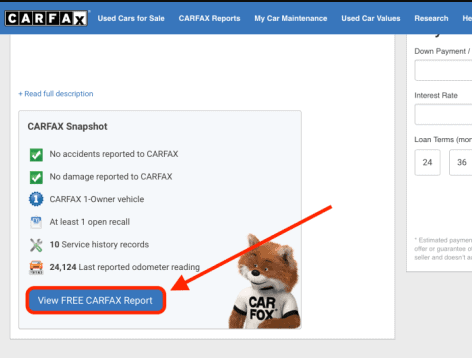
Screenshot taken from Carfax.com/cars-for-sale
How Sellers Can Get a Free Carfax Report
Sellers can obtain a free Carfax report by leveraging dealership partnerships or trade-in assessments:
- Visit a Local Dealership
- Request a Trade-In Appraisal
- Let the Sales Team Run a Carfax
- Ask for a Copy for Your Records
This method benefits owners preparing to sell privately, offering documentation for prospective buyers.
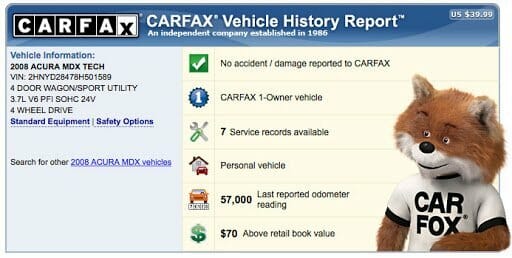

PLACES TO GET FREE Vehicle History REPORTS:
While official Carfax reports offer the most comprehensive data, several trusted platforms provide free vehicle history reports that cover essential VIN-based information. These services help buyers validate a vehicle’s legitimacy before committing to a paid report or inspection.
Trusted Sources Offering Free VIN Checks:
| Platform | Data Coverage | Best For |
|---|---|---|
| NICB VINCheck | Theft and total loss events | Identifying salvage or stolen vehicles |
| VehicleHistory.com | Title history, specs, accident data | Quick ownership and damage overview |
| iSeeCars VIN Report | Pricing trends, recall info, ownership | Market comparison and safety recall tracking |
| NHTSA VIN Lookup | Manufacturer recalls | Identifying unresolved safety defects |
| VINCheckPro (Free tier) | Basic title and record check | Entry-level VIN summary |
These tools allow you to enter a 17-digit VIN and receive an instant report with available data pulled from insurance records, DMV databases, auction logs, and manufacturer records. While they don’t offer the depth of a full Carfax or AutoCheck report, they’re effective for flagging:
- Branded titles (salvage, flood, rebuilt)
- Reported accidents
- Odometer discrepancies
- Recall status and service campaigns
These free resources are especially useful when buying from private sellers, searching Craigslist listings, or evaluating cars from peer-to-peer marketplaces where dealership data is unavailable.
FREE CARFAX Alternative VIN Checks:
If a full Carfax report isn’t available, several Carfax alternatives offer free or low-cost VIN checks using public and third-party data sources. These tools can uncover title branding, accident involvement, ownership changes, and recall status, helping buyers screen out high-risk vehicles before committing to a purchase.
Popular Free VIN Check Alternatives to Carfax:
| Tool | Features Included | Cost |
|---|---|---|
| NICB VINCheck | Salvage, theft records from insurers | Free |
| VehicleHistory.com | Title, accident history, specs, market value | Free |
| iSeeCars VIN Report | Recalls, price analysis, days-on-market data | Free |
| NHTSA VIN Decoder | Manufacturer recall lookup and safety compliance | Free |
| VINCheckPro (Free Tier) | Basic title status, model specs, and ownership history | Free |
These VIN check services use data from national insurance databases, auction houses, vehicle registries, and OEM recall systems. While they don’t provide the full depth of Carfax—such as detailed maintenance records, lien status, or dealer service logs—they still help identify:
- Unreported salvage or rebuilt titles
- Total-loss insurance events
- Unresolved manufacturer recalls
- Basic ownership and registration data
Buyers can use these reports to filter vehicles before purchasing a discounted Carfax or AutoCheck. This layered approach ensures you don’t waste money on a report for a car that already shows serious red flags.
Carfax Online VIN Checker:
You can access a discounted Carfax vehicle history report by purchasing it directly through our platform.
- Visit cheapcarfaxreport.net
- Use coupon code:
cheapcarfaxat checkout - Get a full Carfax report for just $5.99 — instead of paying the standard $44.99
Alternatively, you can compare reports using trusted providers like VinCheckUp, which also offers detailed ownership and accident history at a lower cost.Free Carfax Alternative VIN Checks
Why Use a VIN to Check Vehicle History?
A VIN (Vehicle Identification Number) is a 17-character alphanumeric code assigned to every vehicle. It acts as a digital fingerprint, linking the car to its registration records, accident history, title status, and insurance claims. With the VIN, you can:
- Confirm whether a car has been registered in multiple states
- Check if the vehicle has been reported as a total loss or salvaged
- Uncover past insurance claims, including collision or flood damage
- Identify potential title fraud, odometer rollback, or recall activity
This makes VIN-based history checks essential for anyone buying a used car, verifying a vehicle they already own, or preparing to sell.
Where Can You Find Your Vehicle’s VIN?
The VIN (Vehicle Identification Number) is a 17-character alphanumeric code that uniquely identifies a specific vehicle. It links the car to its registration history, title status, accident records, and manufacturer specifications. Locating the correct VIN is essential when retrieving a Carfax report or performing any VIN-based lookup.
Common VIN Locations on the Vehicle:
| Location | Description |
|---|---|
| Dashboard | Visible through the windshield on the driver’s side — most common location |
| Driver’s Door Jamb | Printed on a factory label inside the door frame |
| Engine Block | Stamped directly on metal (may require inspection light and tools) |
| Under the Hood | Found on the front frame rail or firewall near the engine compartment |
| Vehicle Frame | On some trucks and SUVs, etched near the front wheel well or chassis rail |
| Owner’s Manual | Occasionally noted or diagrammed inside the manual |
| Vehicle Documents | Displayed on title certificates, registration, and insurance paperwork |
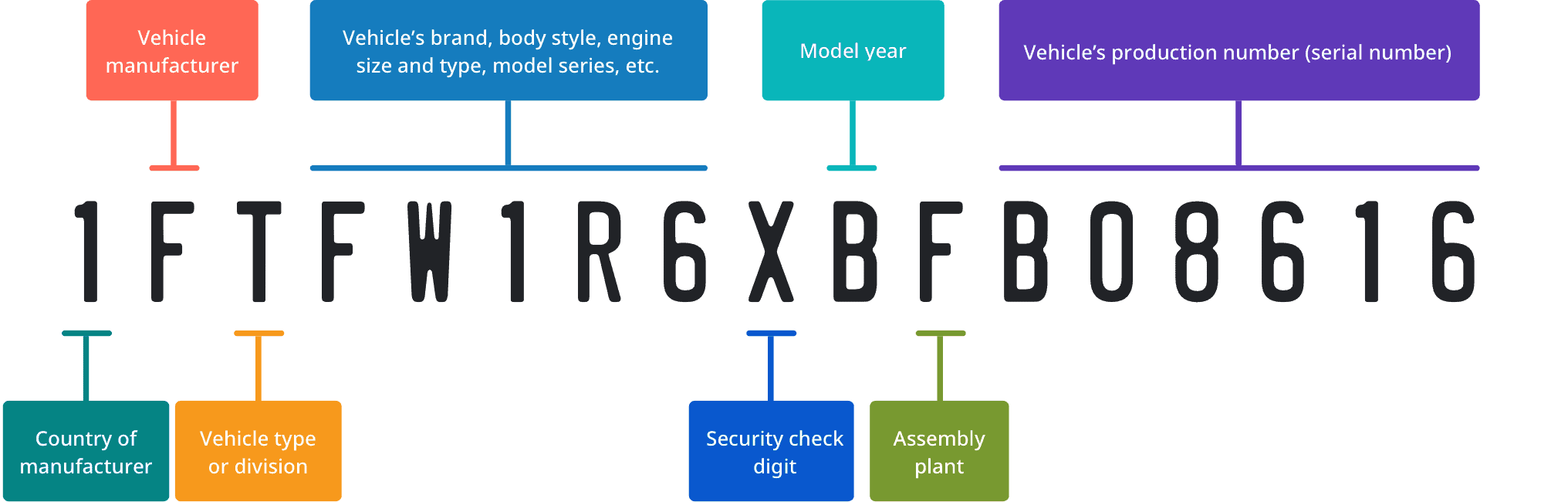
Each VIN is structured to include the vehicle’s manufacturer, model year, plant code, and unique serial number. Cross-checking the physical VIN with the one on the documents ensures authenticity and protects against VIN cloning or fraudulent title activity.
What the VIN Reveals:
- Whether the car was registered in another state
- The type of title (clean, salvage, rebuilt, flood)
- Whether there are any active recalls or safety campaigns
- If any insurance claims or total loss events were reported
- The vehicle’s original specs and production info
To run a Carfax report or use a VIN checker, always enter the full 17-digit VIN with no spaces or dashes.
VIN decoding: How to do it?
Decoding a VIN (Vehicle Identification Number) reveals key information about a vehicle’s origin, specifications, and history. The VIN is made up of 17 characters, and each segment follows a globally standardized format regulated by ISO 3779 and used across North America, Europe, and Asia.
VIN Structure Breakdown
| VIN Position | Characters | What It Represents |
|---|---|---|
| 1–3 | WMI | World Manufacturer Identifier (Country + Manufacturer) |
| 4–8 | VDS | Vehicle Descriptor Section (Engine, body, restraint) |
| 9 | Check Digit | Security code to validate the VIN |
| 10 | Model Year | Year of production (e.g. T = 2026) |
| 11 | Plant Code | Factory or assembly plant location |
| 12–17 | Serial # | Unique production sequence number |
How to Decode a VIN:
- Use a Trusted VIN Decoder Tool
Enter the 17-digit VIN into a free decoder such as:- NHTSA.gov VIN Decoder
- VINCheckPro
- AutoCheck VIN Decoder
These tools pull official specs, recall data, and production details.
- Verify the Check Digit (Position 9)
The ninth character helps confirm that the VIN is valid and not fabricated. If the check digit fails, the VIN may be cloned or fake. - Identify Model Year (Position 10)
In 2026, the model year character is likely “T”, based on the standardized VIN code cycle. - Cross-Reference Serial Number (Positions 12–17)
This portion is unique to each unit and should match across the vehicle chassis, title, and registration papers. - Match WMI and VDS Segments to Specs
Confirm the make, model, trim, engine type, and restraint system align with what the seller has advertised.
What VIN Decoding Helps Detect:
- Mismatched parts or cloned VINs
- Incorrect model year claims
- Title laundering attempts
- Fake import/export vehicles
- Rebuilt or modified frames misrepresented as original
Accurate VIN decoding is essential when purchasing used cars from private sellers, auction platforms, or import listings, where fraudulent activities are more common.
Before you buy a used car, check out a free vehicle history report.
Before you purchase the vehicle, have an auto mechanic inspect it.
Before completing any used car purchase, hire a qualified auto mechanic to perform a comprehensive inspection. Even if the Carfax report or VIN history check shows no reported issues, it may not reveal current mechanical problems or hidden frame damage. A certified technician can identify:
- Undisclosed engine issues, oil leaks, or worn components
- Suspension wear, brake system faults, or tire alignment problems
- Frame damage from prior accidents not recorded in databases
- Signs of flood damage, rust, or corrosion in hard-to-reach areas
- Electrical or safety system failures that don’t appear in history reports
Inspections typically cost $100–$200, but they can save buyers from purchasing a defective or unsafe vehicle. This physical verification step provides an extra layer of protection beyond what digital records can confirm.
Summary: Why Free and Paid VIN Reports Matter When Buying a Used Car
In addition to the verified ways to get a free Carfax report, this guide has outlined other trusted platforms offering free VIN-based vehicle history checks. Tools like NICB VINCheck, VehicleHistory.com, and iSeeCars provide quick access to title branding, salvage records, and ownership changes. When all three return consistent data, it strengthens the credibility of the VIN. However, if records do not match across providers, that inconsistency may indicate VIN tampering, a cloned vehicle, or title fraud. Pause the purchase and verify the source before moving forward.
For full transparency, it’s strongly recommended to purchase a paid vehicle history report—especially when dealing with private sales, auction vehicles, or cross-state transactions. While Carfax remains the market leader in data volume and accuracy, AutoCheck offers a competitive alternative, particularly in auction history and dealer inventory access.
A complete VIN report enables buyers to:
- Review accident history, ownership changes, and service records
- Identify mileage rollbacks, title issues, and frame damage indicators
- Detect signs of flood exposure, airbag deployment, or undisclosed recalls
- Evaluate insurance claim history and prior registration states
- Make data-informed decisions and negotiate pricing confidently
Whether you’re buying from a dealer, private seller, or online marketplace, always validate the VIN using multiple tools and back it up with a mechanic inspection. The 17-character VIN is the gateway to understanding a vehicle’s past—and ensuring you avoid costly, unsafe, or misrepresented purchases.
RELATED POST:
What’s the Difference Between Free and Cheap Carfax Reports?