
What Is a Carfax Report?
Carfax provides vehicle history reports using a 17-character Vehicle Identification Number (VIN). The report records ownership history, accident records, title status, mileage updates, and maintenance events.
Car buyers use Carfax reports to evaluate vehicle condition and ownership timelines before purchase. The report organizes historical vehicle records into a structured timeline.
Carfax collects vehicle records from DMVs, insurance companies, repair facilities, dealerships, and vehicle auctions. These organizations record title transfers, insurance claims, service visits, and sale transactions.
Carfax systems aggregate these records and organize them into a chronological vehicle history linked to the VIN.
Can a Carfax Report Be Faked?
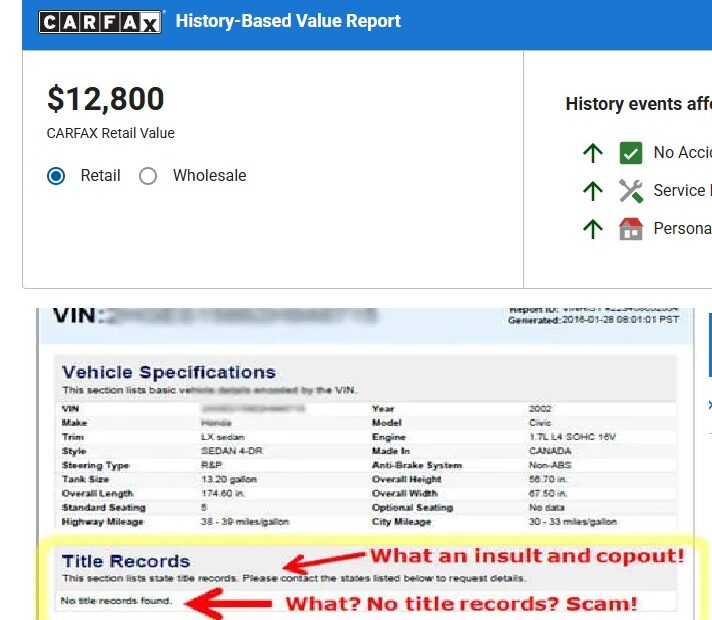
Fake Carfax reports manipulate vehicle history information. Scammers copy the Carfax layout and alter accident records, title status, or mileage entries.
Private sellers and online marketplaces distribute manipulated reports during used-car transactions. Fraudulent listings attach fake reports to increase buyer trust.
Fake Carfax reports appear in four common formats.
Fake Carfax report: Scammers generate fabricated documents that imitate Carfax branding while displaying false vehicle history data.
Edited PDF report: Sellers download legitimate reports and remove accident records, title brands, or ownership changes using PDF editing tools.
Screenshot report: Sellers send screenshots instead of verification links, preventing VIN validation through the official Carfax system.
VIN mismatch report: The report VIN differs from the VIN on the dashboard, door frame, or title documents.
Why Do Fake Carfax Reports Exist?
Fake Carfax reports allow scammers to sell vehicles with hidden defects. Fraudsters alter vehicle history attributes to present a clean ownership record.
Scammers remove negative history entries from vehicle reports to hide mechanical damage or legal risks. Edited reports conceal salvage titles, accidents, flood exposure, and theft history.
Used-car market pricing shows clean-title vehicles sell for higher prices than salvage or accident vehicles. Fraudsters exploit this carfax price difference using manipulated reports.
Key Signs a Carfax Report Might Be Fake
Fake Carfax reports display structural inconsistencies. Fraudulent reports alter accident history, mileage entries, or ownership records.
Carfax verification links authenticate reports through the official Carfax domain. Fake reports replace official links with screenshots or edited PDFs.
Vehicle Identification Numbers (VINs) connect vehicle records to a specific car. Fake reports display VIN numbers that differ from the vehicle VIN.
Carfax report layouts follow a standardized template. Fake reports show distorted logos, missing report IDs, altered fonts, or incomplete timelines.
The Report Is Delivered as a Screenshot or PDF Only
Carfax reports provide verification through a secure web link tied to a VIN. Legitimate reports load as interactive webpages on the official Carfax domain.
Screenshot or Carfax PDF Sample reports remove verification attributes required for authentication. Static images prevent VIN lookup and report ID validation.
Carfax verification systems confirm authenticity through VIN-linked database records. Reports delivered only as screenshots or PDFs indicate manipulation.
Legitimate Carfax Reports Are Accessed Through a Secure Web Link
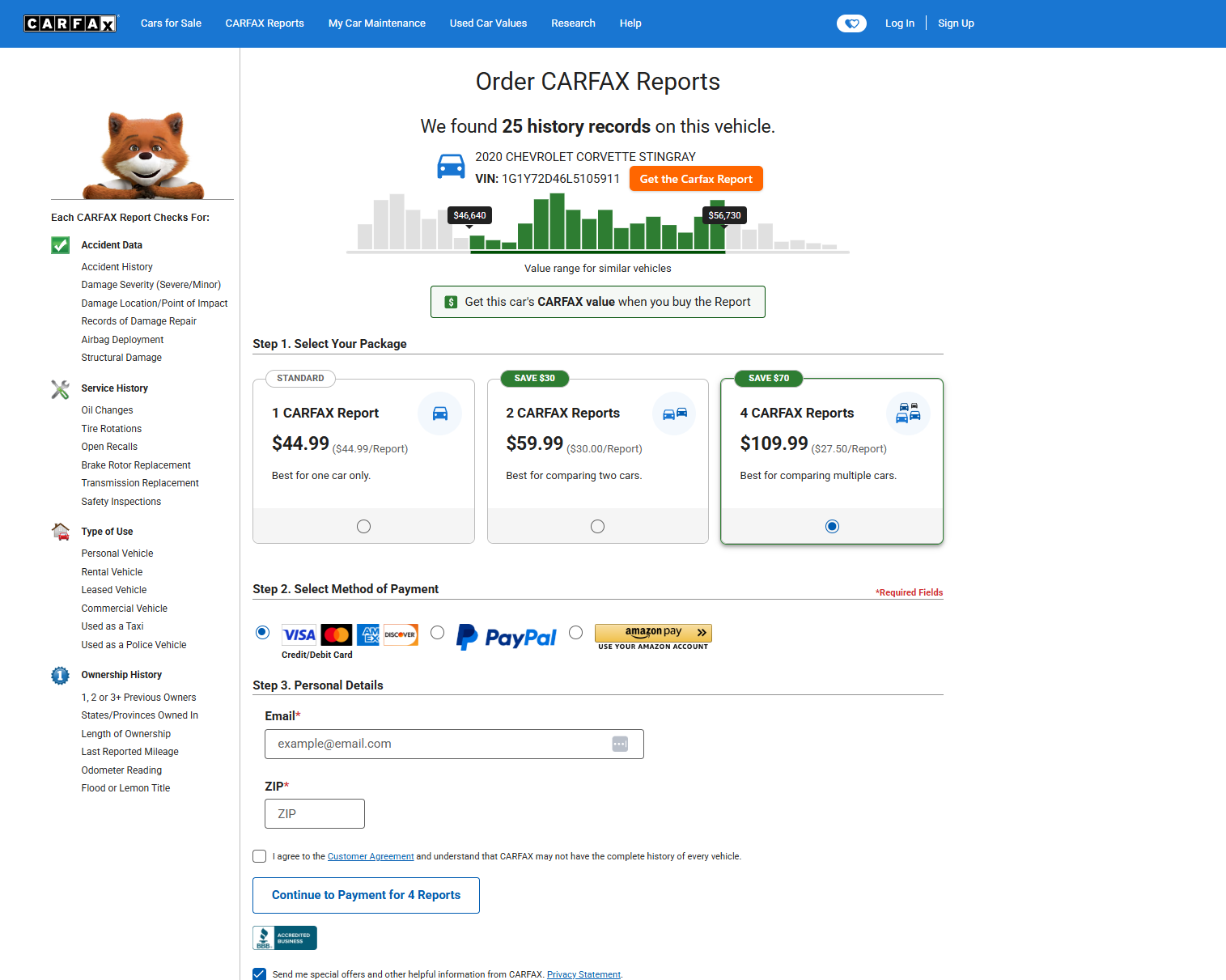
Carfax reports load through secure links hosted on the carfax.com domain. The link connects the report to a VIN stored in the Carfax database.
Official Carfax report pages display structured vehicle history data including ownership records, mileage entries, accident reports, and service history.
Secure Carfax URLs contain unique report IDs and VIN-linked records. This structure enables direct verification through the Carfax system.
Missing Carfax Branding or Layout Issues
Carfax reports follow a standardized layout created by the Carfax reporting system. Authentic reports display the Carfax logo, structured tables, and a unique report ID.
Fake Carfax reports contain visual inconsistencies. Fraudulent documents show distorted logos, incorrect fonts, misaligned tables, or missing report identifiers.
Carfax templates generate reports using fixed formatting rules. Missing structural attributes indicate edited or fabricated documents.
Suspiciously “Perfect” Vehicle History
Vehicle history reports record ownership transfers, service visits, accident claims, and mileage updates. Authentic reports contain multiple entries collected from automotive databases.
Suspiciously perfect histories display missing or incomplete records. Fraudulent reports show zero accidents and zero service entries despite years of vehicle use.
Automotive databases collect records from DMVs, insurers, and repair facilities. Long ownership periods without maintenance records indicate manipulated vehicle history.
Broken Verification Links
Carfax verification links authenticate reports through the official Carfax domain. Legitimate Carfax reports include secure URLs connected to VIN records and report IDs.
Fake Carfax reports contain broken or inactive verification links. Fraudulent URLs redirect to unrelated pages or non-functional links.
Carfax database lookup confirms report authenticity through VIN search. Links that fail to load VIN records indicate fabricated reports.
How to Verify a Carfax Report Is Real
Carfax verification confirms report authenticity through the official Carfax database. Buyers enter the 17-character VIN on the Carfax website.
Official Carfax reports display ownership records, accident history, mileage entries, and service events linked to the VIN.
VIN cross-verification confirms report accuracy. Buyers compare the VIN on the vehicle, title documents, and report.
Use the Official Carfax Website
Carfax website provides direct access to the vehicle history database. Buyers enter the 17-character VIN on Carfax.com to retrieve reports.
Official Carfax results display verified ownership history, accident records, title status, and mileage entries.
Carfax VIN lookup confirms authenticity because each VIN connects to a unique vehicle history record.
Compare the Report URL
Carfax report URLs verify authenticity through the official domain. Legitimate reports load from URLs containing carfax.com and a unique report ID.
Fake Carfax reports display altered or external URLs. Fraudulent links use shortened domains or unrelated websites.
Carfax domain verification confirms report legitimacy because the system generates reports only within its domain infrastructure.
Cross-Check with Other Vehicle History Services
Vehicle history services provide independent verification databases. Buyers use AutoCheck, NICB VINCheck, and state DMV databases.
VIN cross-checking compares the same 17-character VIN across multiple reporting systems.
Data discrepancies reveal manipulated reports. Differences between Carfax records and other databases indicate missing accident or title records.
What to Do If You Suspect a Fake Carfax
Vehicle buyers verify suspicious reports using independent VIN lookups and Carfax alternative websites. Buyers enter the VIN on the official Carfax website.
Vehicle history databases confirm report accuracy across multiple systems. Buyers compare Carfax VS AutoCheck, and NICB records.
Vehicle inspections confirm physical identifiers. Buyers compare the VIN on the dashboard, door frame, and title documents.
Common Carfax Scams Used by Car Sellers
Car sellers use several scams involving manipulated vehicle history reports. Fraudsters hide accident damage, title branding, or mileage discrepancies.
Fake report scams imitate the Carfax report layout and display fabricated ownership and accident history.
Third-party report scams redirect buyers to unknown report websites that charge fees for fabricated records.
Edited report scams modify legitimate Carfax PDFs to remove accident or salvage entries.
VIN switching scams attach a clean report from another vehicle using a different VIN.
Fake “Free Carfax” Scam
Fake “Free Carfax” scams advertise free vehicle history reports to attract buyers.
Fraudulent report websites request VIN details and payment information while imitating the Carfax interface.
Scam platforms deliver fabricated reports that hide accident records, title branding, or mileage discrepancies.
Seller Requests Buyer to Pay for a Specific Report Site
Fraudulent sellers direct buyers to specific vehicle history websites.
Scam report websites imitate legitimate providers while charging report fees.
Vehicle verification systems operate through providers such as Carfax, AutoCheck, and NICB VINCheck.
Seller-recommended report sites often lack verified database connections.
Edited Accident History Reports
Edited accident history reports remove collision records from vehicle history documents.
PDF editing tools allow scammers to delete accident entries from downloaded reports.
Insurance claim databases record accidents linked to VIN numbers. Missing accident entries indicate manipulated reports.
How to Protect Yourself When Buying a Used Car
Used car buyers protect themselves by verifying vehicle history before purchase.
Carfax VIN lookup retrieves official vehicle history records.
Certified mechanics identify hidden mechanical damage during pre-purchase inspections.
VIN comparison verifies ownership and legal status using dashboard plates, door frames, and title documents.
Multiple database checks confirm accident history and theft records using Carfax, AutoCheck, and NICB VINCheck.
Final Checklist to Identify a Fake Carfax Report
Vehicle buyers identify fake reports through structured verification steps.
VIN verification confirms the 17-character VIN matches the dashboard, door frame, and title documents.
Official Carfax links authenticate reports through the carfax.com domain.
Screenshot or PDF reports indicate manipulation because they lack VIN verification.
Cross-database checks confirm accident history, title branding, mileage records, and theft status.